


This is the story of the Japanese prisoner of war camps on the island of Taiwan (Formosa) during the Second World War and of the men who were interned in them.
It seems that many people know about the hardship and suffering of the POW's working on the Death Railway in Thailand and Burma, but few know about the "hell-camps" of Taiwan. We hope to tell the story of the suffering and deprivation endured by the POW's so that all will know - and hopefully never forget!
Our site contains descriptions of the prison camps, a detailed list of all the former prisoners, an honour roll of those who died, and the story of the Taiwan POW Camps Memorial Society and its efforts to make sure they are never forgotten.

2024 - ANOTHER EXCITING YEAR AHEAD
POW CAMP TOURS RESUMED IN 2023

GOOD NEWS - Taiwan has been open again to overseas visitors since early last year and now our POW Camp Tours program is up and running again. We have run a number of tours - for overseas POW family members, military organizations and researchers, as well as local residents and schools. Now those who have had to put off a tour over the past several years because of covid can once more make plans to visit Taiwan!
We are once more accepting applications for POW camp tours and we highly recommend that persons wishing to visit Taiwan do so during our Remembrance Week event which is held every year in mid-November in the week around Remembrance Day. At that time we organize visits to many of the camps and arrange memorial services. Participants will be able to fellowship with other family members in a common purpose of honouring and remembering their loved ones. Also, the costs per person are usually less when we have a number of guests attending the event as they are divided equally among the participants. Applications for this year's annual Remembrance Week event - which will be held from November 6th to 13th inclusive are now open. Please contact us early to ensure you have a part in this exciting program.
If November is not convenient, then visitors may come at pretty well any time throughout the year - subject to the availability of the Society director to host the tour. This needs to be worked out well in advance by contacting the Society and giving proposed dates of the desired visit.
We invite anyone who is interested in a tour to consult the 'POW CAMP TOURS' page on the website and we look forward to hearing from you.
Taking a pilgrimage is important for a variety of reasons. For those who lost family and loved ones on the battlefields or in prison camps, or for those who had family veterans who returned, a pilgrimage is a way to shorten the distance between home and the site of their conflict. For people who only connect with the battlefields and prison camps through history books, visiting these sites is an opportunity to more fully understand the sacrifices that were made by many for the freedom that we continue to enjoy today.

RE-DEDICATION OF THE HEITO POW MEMORIAL
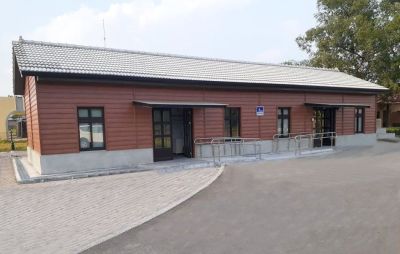 On November 13th, following this year’s wonderful Remembrance Day service at Kinkaseki, the Society director escorted our FEPOW family guest Laura Donaghey - whose great-grandfather Sgmn. Robert Bagwell RCOS, had been in Heito Camp, down to Pingtung for the re-dedication of the Heito Memorial at the relocated site inside the newly constructed Pingtung County Animal Rescue Centre.
The new exhibition hall on the site of the former Heito POW and Ai-Liao Military camps.
The Pingtung County Government has always been a big supporter of our work and we were honoured that the county governor Ms. Chou, Chun-Mi could take the time to join us for the re-dedication ceremony. We also had as special guests alongside Laura, Mr. Michael Guu, former Deputy County Governor who was present with us for the original dedication of the memorial back in 2004 who shared a few words of tribute, and Mr. Pan, An-Chuen and Ms. Lily Yang, family members of the former camp guards Mr. Lin, Chuen-Hsin and Mr. Yang, Dun-Chin. These men and their families were instrumental in helping to document the history of the former POW camp and they would come out to join with us every time that we brought POWs or their family members to visit.
Emcee Mark Wilkie welcomed everyone and introduced the governor who addressed the gathering with a thoughtful message about remembering and the county’s pledge to make sure the story of Ai-Liao camp and the POWs is not forgotten. The Society director shared a brief history of the POW camp and the site, and then Michael Guu brought a message of tribute. Following that Mr. Pan and Ms. Yang gave some of their thoughts on the old camp and the memorial. Wreaths were then laid on the memorial and group photos taken. Rev. Maurie Sween brought a fitting message and prayer and finally Laura read ‘A Tribute to the POWs’. A moment of silent remembrance closed out the service. A time of fellowship followed with more photos and plenty of warm and friendly conversation. This was truly a memorable event and a fitting conclusion to the story of Heito Camp. Now it - and all the men who passed through it, will never be forgotten.
The Society wishes to thank Ms. Li, Chi-ya, the director of the Animal Rescue Shelter Project and Ms. Lin, Aichen the designer of the exhibition hall for their untiring support for the memorial and help in telling the POWs’ story. Now all of the POW Camp Memorials across Taiwan are permanently mounted in concrete bases for posterity. Here are some photos from the day . . .
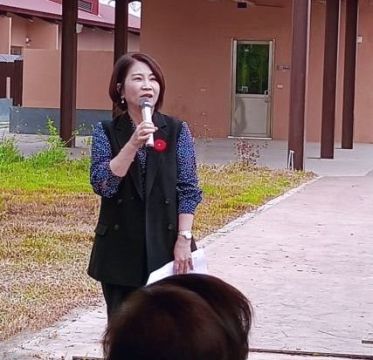
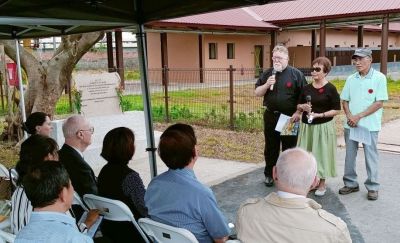
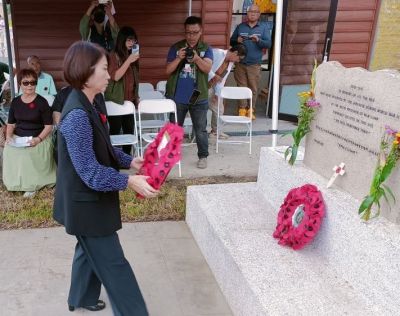
Gov. Chou addressing the group. Mr. Pan & Ms. Yang share memories. Gov. Chou laying a wreath.
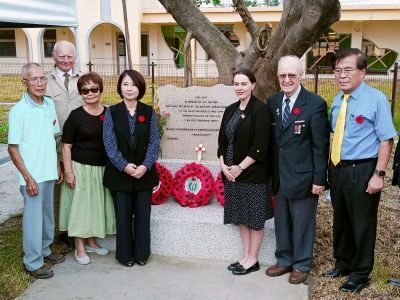
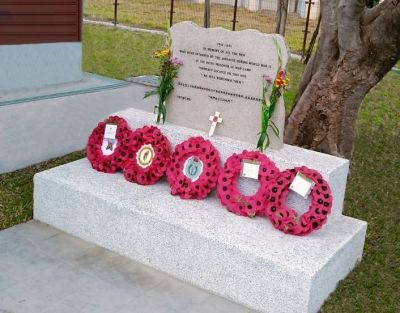
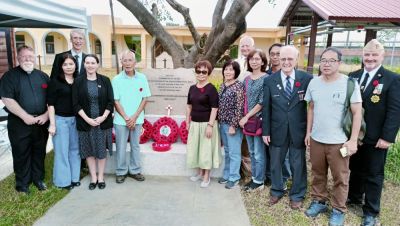
Guests at the memorial. The new Heito POW Memorial. Group photo after the ceremony.
See the complete history of the Heito POW Camp and the relocation of the memorial in the Fall-Winter 2023 newsletter. It is also archived in the ARTICLES and STORIES section of the website.
SCHEDULE OF REMEMBRANCE EVENTS IN TAIWAN FOR 2024 . . .
MAY 26TH - US MEMORIAL DAY - Sponsored by Taiwan VFW Post #9957 - held at the old Taipei Prison Wall - watch for further announcement
JUNE 16TH - AMERICAN AIRMEN'S MEMORIAL SERVICE - held at the old Taipei Prison Wall - watch for further announcement
AUGUST 10TH - 17TH ANNUAL FEPOW DAY - held at the Spot Theatre, Zhongshan N. Rd. Taipei - reservations are required
NOVEMBER 6TH - 13TH - 27TH ANNUAL REMEMBRANCE WEEK EVENT - featuring POW camp tours for former POW family members and overseas guests with the REMEMBRANCE DAY service on the site of the former Kinkaseki POW Camp in Jinguashi, Taiwan held on NOVEMBER 10th. More announcements will be forthcoming.
Note; Other commemorations may be held as opportunities arise.
Let us all make a point to take part in these events to honour and remember those who served and those who died for our freedom.
Please direct any inquiries to the Taiwan POW Camps Memorial Society through the contact page on our website at: www.powtaiwan.org.
FALL-WINTER 2023 NEWSLETTER NOW AVAILABLE . . . 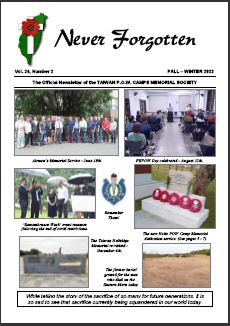
The Society's Fall-Winter 2023 newsletter "Never Forgotten" is up on our website now.
CLICK HERE for the direct link to the page -
It is also available from the link on the 'homepage' below in the "What's New on the Website" section.
You can access this newsletter - and all of our previous ones, by looking in the Society Section of our website and clicking on the item in the newsletters box.
Thank you for your continued interest and support for our work of remembering the Taiwan Prisoners of War.
AMERICA'S DOUBLE STANDARD EXPOSED
U.S. deports 95-year-old who was a Nazi concentration camp guard
Excerpts from an article by LI COHEN / CBS NEWS
A 95-year-old man who was a Nazi concentration camp guard during WWII was deported from the U.S. to Germany in 2021. Friedrich Karl Berger, who lived in Tennessee, was deported "for participating in Nazi-sponsored acts of persecution" while serving at a concentration camp in 1945, the Justice Department said.
A 2020 trial by the Department of Justice found that Berger served the Nazi regime at a Neuengamme sub-camp near Meppen, Germany, during the Holocaust. Many of the prisoners who were Jewish, Russian, Dutch and Polish, were held at the camp in the winter of 1945. "The conditions were "atrocious", as the prisoners were forced to labor outdoors "to the point of exhaustion and death," the DOJ said. On the day that the camp was evacuated, there were 1,773 imprisoned at the camp.
Berger worked at the camp until the Nazis evacuated it in March 1945, at which time the prisoners were forced to go on a death march to the main Neuengamme camp. "The two-week transfer was made in inhumane conditions", according to the DOJ, "and 70 people who were imprisoned died in the process".
Berger is the 70th person identified as a Nazi persecutor to be removed from the U.S., according to the Department of Justice (DOJ).
Acting Immigration and Customs Enforcement (ICE) Director Tae Johnson said the department "will never cease to pursue those who persecute others." "This case exemplifies the steadfast dedication of both ICE and the Department of Justice to pursue justice and to hunt relentlessly for those who participated in one of history's greatest atrocities," Johnson said, "no matter how long it takes."
Ed. Now this begs the question, "WHAT ABOUT THE JAPANESE WHO COMMITTED SIMILAR OR WORSE ATROCITIES AGAINST AMERICANS AND THEIR ALLIES IN ASIA IN WORLD WAR II ?"
Why over all these many decades since World War II, has the US Department of Justice never "pursued those Japanese who persecuted others, or hunted relentlessly those who participated in another of history's greatest atrocities in Asia, no matter how long it took."? There is definitely a double standard being applied here.
The war crimes trials held all across Asia after World War II were terribly flawed and lacking, and there is doubtless a huge difference and a double standard in the attitude of the US and the other Allied nations today regarding their belief in justice and their efforts to also right the many wrongs and atrocities committed against POWs and civilians in Asia in World War II. America and those other nations should hang their heads in shame for not properly ensuring that real "justice for all" - as their constitutions state, was done.
In thousands of cases justice was never served for those who were tortured, starved, beaten and murdered in the "Asian Holocaust". It seems that it is too late for that to happen now, given the current world situation, but that doesn't mean that America and its Allies won't go down in history as glossing over some of the worst atrocities of all time. LEST WE FORGET!
A WORD FROM A VETERAN FOR OUR TROUBLED TIMES . . .
Here is a word to America - and to us all, from a WWII veteran – very fitting and timely for these days in which we live, and in which so many are suffering and dying from covid, racism, anarchy and tyranny.
Lt. Sr. Grade S., TOM MORRIS, USNR, a member of Torpedo Bombing Squadron VB-80, on the USS Ticonderoga served in the South Pacific – and had this to say about those troubled times and his wartime duty:
“I think all of us, all of the United States, was almost to a man united during those years - and everybody in the country, was dedicated to one thing, and that was defeating our enemies: Germany and Japan. So all of us were just doing what we knew we had to do. We were all in the same boat.”
Tom was one - a part of the ‘Greatest Generation’, who loved and fought for his country and did everything he could to protect her and make sure she stayed strong, united and FREE. May we never forget their example or their sacrifice!
Like in WWII when our countries were threatened and attacked by enemies, everyone knuckled down, sacrificed and worked together for everyone's good and that of their country. It seems that spirit no longer exists in so many of our countries today. We have become so selfish in our hearts and lives that we no longer care for others or stand together for what is right to defeat these enemies of our nations.
What a shame that so many millions in America as well as in Canada, the UK, the EU and other freedom-loving countries, couldn’t embody that same spirit today, and all pull together as we fight an even greater enemy – the world-wide scourge of the covid virus, and also the tyranny and the threats of war in Asia and Europe and the domestic mess our countries are in today. May God grant us the strength and the courage and the unity we need in these dire times.
If we are united, there is no way that we can lose. If we continue to be divided, there is no way that we can win!
'NEVER FORGOTTEN' - THE TAIWAN POWS' STORY. . .
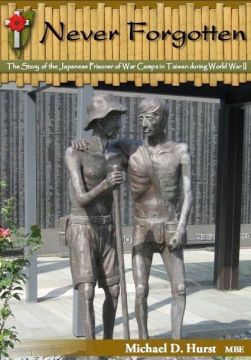 After 24 years of research and more than three years in production, we are happy to introduce the long-awaited book by Society director, Michael Hurst MBE, titled – 'Never Forgotten. . . The story of the Japanese Prisoner of War Camps in Taiwan during World War II.'
It is the only book ever written that provides the complete story of all the Taiwan Prisoner of War camps and the men who were interned in them.
Description: Softcover Book: 23.5 cm x 16.5 cm (9 1/2 x 6 1/2 inch) format, with cover photo featuring the sculpture of the two POWs in the Taiwan Prisoner of War Memorial Park in Jinguashi, Taiwan. The book contains 620 pages of text and is lavishly illustrated with 850 photos, POW artwork and ephemera (many in colour). Printed on high-quality glossy paper, they visually enhance this epic saga making its 32 chapters and appendices come alive for the reader.
Summary: This highly researched history of the little-known Japanese POW camps on Taiwan in World War II features the accounts of former Taiwan prisoners of war through numerous interviews, the collection of materials supplied by them and their families, and thousands of hours spent poring over their diaries and letters, as well as other material from war records, regimental diaries and archives. It is their story, told in their words from what they have shared with the author, and that which was discovered during 24 years of research. This is a must read for anyone interested in the history of World War II and the prisoners of war in the Far East.
For more details, comments and reviews on the book, kindly click on 'THE BOOK' page in the menu on the left.
Note: The sales of 'Never Forgotten' have been outstanding, the first run has sold out and at this time it is not certain if or when a second run might be done. It will all depend on the demand. Those still wanting a copy should contact the Society from overseas or locally in Taiwan by email to request to be placed on a waiting list for a book. Thank you.
75 YEARS LATER - THE AFTERMATH OF WORLD WAR II AND JAPAN TODAY. . . 
2020 was the 75th Anniversary of the end of World War II, and the following is a collection of articles and comments regarding the postwar position of the Japanese government and also those of the various allied governments in the aftermath of World War II. Some of these facts will be shocking to readers, but they are included here so that all may know of the corruption and collaboration that has gone on in the 75 years since the end of the world's greatest conflict. For example . . .
* The United States granted immunity to Emperor Hirohito and Prince Asaka - who ordered the Rape of Nanking and also the massacre of doctors, nurses and patients in the hospitals in Hong Kong. Evidence shows that General Douglas MacArthur and his senior aides and Japanese high court officials schemed to fix testimony at the Tokyo War Crimes Trials so as not to implicate Hirohito and other members of the Imperial Family.
* MacArthur also managed to have Generals Homma and Yamashita captured and brought to mock trials very soon after the Japanese surrendered - even before the war crimes trials were properly set up and convened . . .
CLICK HERE to read the full story from the Articles and Stories section.
POW WEBSITE PHOTOS - MORE WANTED

Over the past 25 years we have gathered photos of more than 750 former Taiwan prisoners of war and have added them to our listing of the 4,370 men who were interned in the various camps in Taiwan. Now, in addition to listing the POW’s name, rank, regiment and the camps where he was interned, a photo of the man has been added to that listing where available. Also, if the man died as a POW in Taiwan we have included a copy of his grave photo from the Honour Roll. We hope this new format will help these men to be remembered more personally with the addition of their photos, as this is what our site is really all about.
We are still looking for more photos of the former Taiwan POWs - hopefully in uniform taken around wartime, but photos taken later after the war are acceptable too. We invite you to contact us and share photos of your Taiwan POW relative to add to our collection which will help us to further ensure that they are not forgotten.
If the photos are seen, then the men who are in the photographs are remembered.

WHAT'S NEW ON THE WEBSITE
December 12, 2023 - "26 Years of Researching, Remembering and Honouring the Taiwan POWs" added to the Articles & Stories Section. CLICK HERE.
December 12, 2023 - See the complete history of the Heito POW Camp and the relocation of the memorial in the Fall-Winter 2023 newsletter.
December 12, 2023 - Fall-Winter 2023 Newsletter uploaded to the site. CLICK HERE or go to the Society Section and click on the newsletter in the Newsletters box.
November 13, 2023 - The newly relocated Heito POW Memorial was rededicated on this day. See the update in "Memorials for the Taiwan POWs" in the Articles and Stories section - CLICK HERE.
June 6, 2023 - Spring-Summer 2023 Newsletter uploaded to the site. CLICK HERE or go to the Society Section and click on the newsletter in the Newsletters box.
December 12, 2022 - Fall-Winter 2022 Newsletter uploaded to the site. CLICK HERE or go to the Society Section and click on the newsletter in the Newsletters box.
June 17, 2022 - The Story of a young soldier who died in a Japanese POW camp. CLICK HERE to read the story in the Articles and Stories Section.
We would like to remind our viewers that this website is a work in progress, so be sure to check back often.
NOTE: All of the Society's newsletters from 1999 to the present can be found in the 'Society Section'. Just click on the newsletter in the Newsletters box.
LISTEN TO THE TAIWAN POW INTERVIEW ON YOUTUBE
 On Friday May 22nd 2020, the Society director was invited by the Taipei Broadcasting Station to share a little of the story of the Taiwan POWs and the camps on their radio program called ‘Resident’s Messenger‘.
Various topics relating to the men who were captured in Hong Kong, Singapore, the Dutch East Indies (Indonesia) and the Philippines and brought to Taiwan to work as slaves for the Japanese were discussed – along with Taiwan’s significance in World War II. Also covered is the story of many of the former POW camps, the conditions the POWs suffered in them and how they survived.
The show - which runs about 45 minutes, is also video-taped and is available for viewing on YouTube at the following link: https://www.youtube.com/watch?v=GW1piZc7Qkg&feature=youtu.be

WATCH THE REMEMBRANCE DAY SERVICE AT KINKASEKI
In 2009 six former Taiwan POWs returned to Taiwan to join in the annual Remembrance Day service at Kinkaseki. Society supporter and good friend Chiang, Hsiao - Fang produced a slide show of the event and we invite you to watch it and remember the men to whom we owe a debt that can never be repaid. Lest We Forget!
Click here to view the presentation.
LISTEN TO THE POWS' STORY
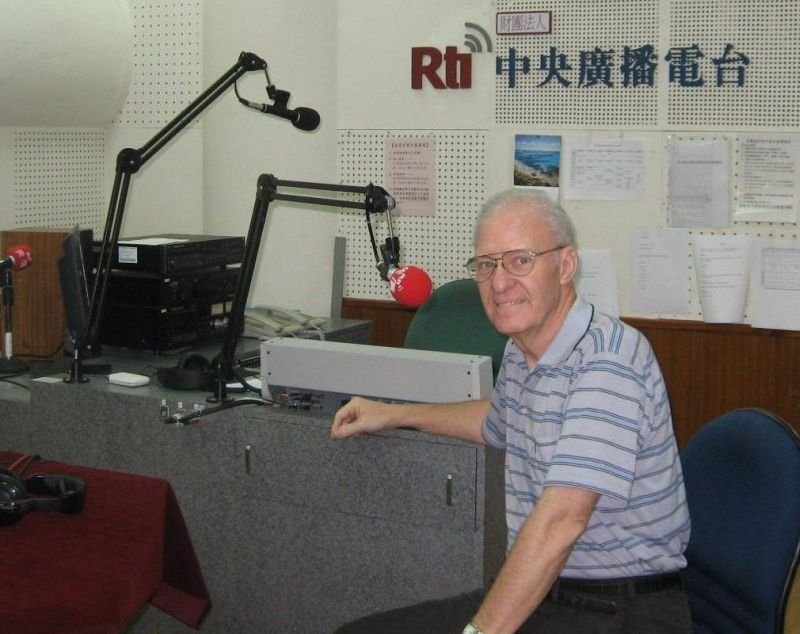
Society director Michael Hurst is featured in two radio interviews with Radio Taiwan International. We invite you to:
- Take an audio tour of the Kinkaseki POW Camp.
- Learn about some of the other former Taiwan POW camps and the men who were interned in them. Also mentioned are some of the Society's activities and events.
To listen to these programs click the links below -
(1) Time Traveler: Tour of Kinkaseki POW Camp
(2) Time Traveler: POW camps in Taiwan and stories of the men
We would welcome any comments or questions.
WANTED - NAMES OF POWS EVACUATED ON THE USS SANTEE & THE USS BRISTER
The Society is urgently seeking information regarding the POWs who were evacuated from Taiwan on September 6, 1945 on the aircraft carrier USS Santee CVE-29 and the Destroyer Escort USS Brister DE-327.
We have the lists of the POWs transported from Taiwan to the Philippines in September 1945 on the carrier USS Block Island, the DE's USS Thomas J. Gary, USS Finch, USS Kretchmer and the New Zealand Hospital Ship Maunganui. Sadly, although we have obtained the logs from the USS Santee, no list of POW names was attached, and we have only a partial list of men from the DE USS Brister. So that leaves the USS Santee and USS Brister that we still need complete lists for.
We have searched various archives to try to find the ships' deck logs and service records, but up to now nothing has turned up.
If there are any former crew members of these two ships who know of the lists and where they might now be, please kindly get in touch with us. Also, if any researchers have access to the NARA or other Navy sources and can help, that would be much appreciated as well.
We would also like to hear from former POWs and their families if they have any knowledge that their relative or anyone they knew sailed from Taiwan to Manila on either of these two ships. We would be very grateful for any help and information we can get.
at-anchor-1942-1b.jpg)
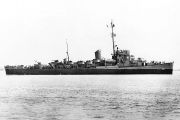
USS Santee - CVE-29 USS Brister - DE-327
TAIWAN POW WAR GRAVE AND MEMORIAL PHOTOS AVAILABLE - FREE!
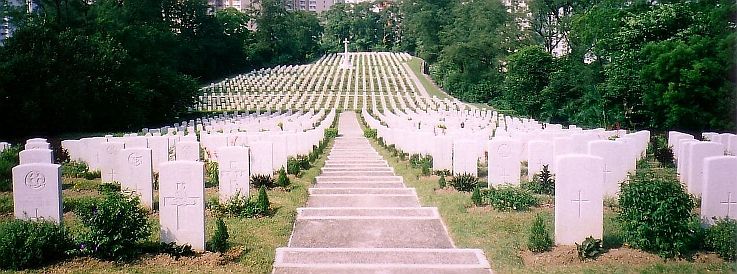
Are you looking for a photo of a Taiwan POW's grave or name on a memorial?
The Taiwan POW Camps Memorial Society has photos of every former Taiwan POW's grave. We have all the British, Australians and Dutch from the Sai Wan War Cemetery in Hong Kong, and all of the American war graves from the Manila American Cemetery, the Punchbowl Cemetery in Hawaii and those in various Veterans Affairs and private cemeteries in the USA. We are pleased to be able to supply these war grave and memorial photos FREE OF CHARGE to anyone requesting them.
Formerly a part of the ASIA WAR GRAVES PHOTO GROUP, we are happy to announce the formation as of January 1, 2017 of ASIA WAR GRAVES, a new site run by our team member Tony Buckley - who over many years, has photographed tens of thousands of war graves and names on all the memorials in 17 countries across Asia. He will continue on with the work that was started by the AWGPG in 2012. Those looking for any Asian grave photos should now contact ASIA WAR GRAVES at: http://www.asiawargraves.com/ for further information on the war cemeteries and memorials covered, how to obtain a photo and the other services that are provided - FREE OF CHARGE!
Click here...for further information on the new ASIA WAR GRAVES, and also the services that are provided by our POW Society - FREE OF CHARGE!

Another great source for FREE worldwide War Grave & Memorial photos . . .
An excellent organization in the UK with a website offering thousands of FREE war grave and memorial photos worldwide is British War Graves - War Graves Photographs. Founded and operated for over 10 years by Mick McCann in the UK, the site provides photos for almost all the world’s war cemeteries and more FREE.
Click here for more information on free war grave and memorial photos and to visit their website.

© COPYRIGHT 1998 - 2024
All material on this website, including articles, maps, photographs, drawings etc. is the copyright of the
Taiwan POW Camps Memorial Society
and/or those people or organizations who have contributed such material. We are happy for material on the Taiwan POW Camps Memorial Society site to be used for schools or research purposes, provided reference is made to its source and/or the owner.
No material may be used on another website or reproduced in any manner by any other means or method without permission from the
Taiwan POW Camps Memorial Society.
All material on this website, including articles, maps, photographs, drawings etc. is the copyright of the
Taiwan POW Camps Memorial Society
and/or those people or organizations who have contributed such material. We are happy for material on the Taiwan POW Camps Memorial Society site to be used for schools or research purposes, provided reference is made to its source and/or the owner.
No material may be used on another website or reproduced in any manner by any other means or method without permission from the
Taiwan POW Camps Memorial Society.
